


Fast, Secure and Most Reliable Way of Cargo Movement by Air
Air freight is the fastest way to move goods internationally. It is suitable for items having a high value, which are time sensitive or need to be moved quickly, like perishables. Air freight has unmatched speed and reach with respect to pharmaceuticals and electronics, fashion goods, and documents.
While air freight costs more than ocean or road freight, it decreases delivery time for businesses to service urgent demand and maintain inventory flow. Airlines operate on fixed schedules, allowing predictability of service and consistency around the world.
Step 1: Cargo Booking & Documentation
Everything begins with choosing the appropriate flight route and booking
cargo space with an airline. Factors such as size, weight, and level of urgency determine whether the shipment will be considered general cargo or priority freight. Booking may be confirmed pending availability of flights and some work on transit time and pricing.
Documentation includes the Air Waybill (AWB), Commercial Invoice, Export Declaration, plus any permits that are needed for restricted goods. The purpose of these documents is to ensure that the cargo complies with aviation and customs regulations for both export and import.
Step 2: Cargo Pickup & Packaging
The cargo is picked up from the shipper’s premises to the air cargo terminal. Given the stringent safety requirements of the airline, packaging must be assuredly strong but light and acceptable for transportation by air. For special cases like fragile or hazardous goods, extra care is required for special labeling.
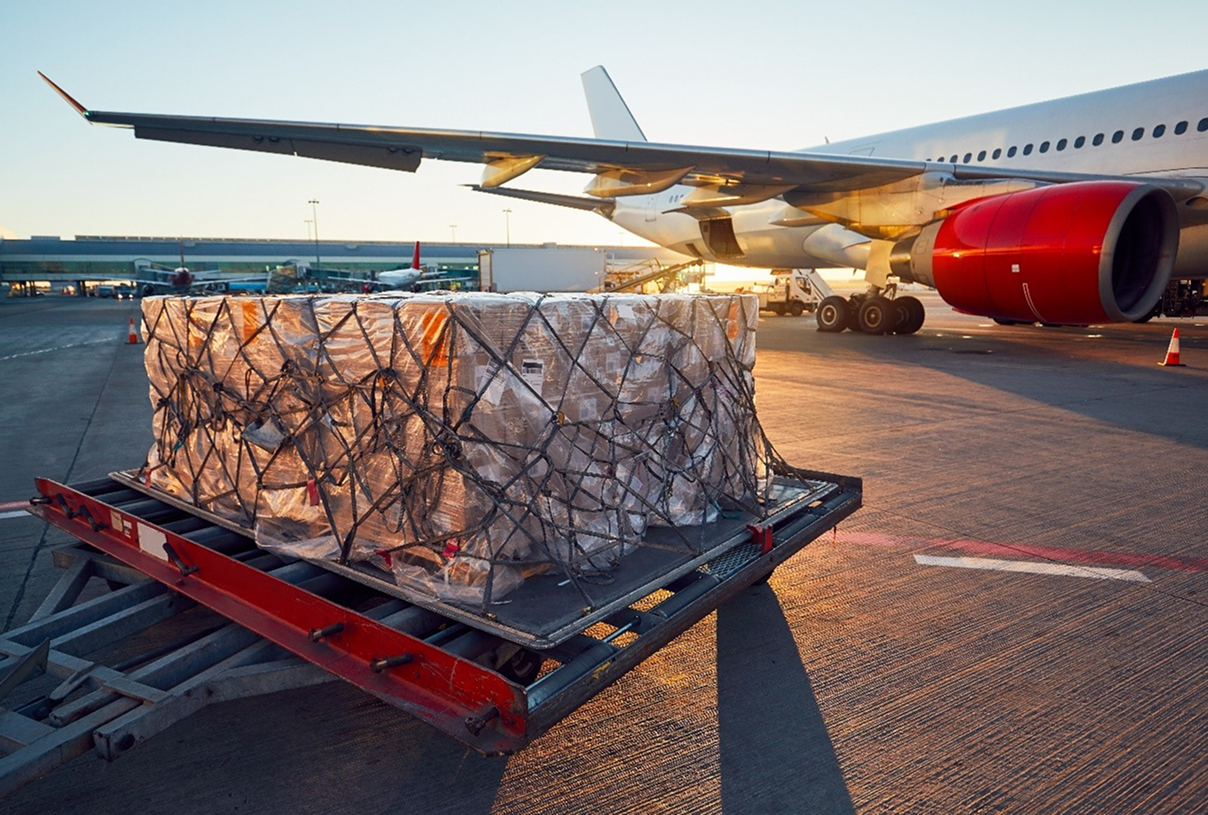
Virtuous packaging assists in minimizing damages and allows expeditious handling at the cargo terminal. Some shipments are palletized or made secure in containers called ULDs (Unit Load Devices) to optimize aircraft space.
Step 3: Security Checks & Export Clearance
Cargo, before departure, goes through the screening methods like X-ray, sniffer detection, or manual checks. All these methods are made mandatory to follow aviation safety regulations.
Progressing at the same time is the export customs clearance, which involves submission of export documents, validating item classification, and confirming tax compliance. Approval is needed before the cargo is given clearance to load into the aircraft.
Step 4: International Air Transit
After clearance, the cargo is on board and airborne to its designated destination. Airfreight may have either direct shipping or transshipment via hub airports. Generally, transit time takes from 1 to 5 days depending on distance and service mode selected.
Throughout the journey, cargo is tracked using the Air Waybill number. Should transit delays or changes in routing be needed, the real-time tracking system in coordination with airline support services will apply.
Step 5: Import Clearance & Customs
After landing, the receiving terminal is responsible for importing clearance with respect to cargo movement. The documents are checked by local customs authorities together with the cargo inspection, should it be required. Payments of duties or VAT have also been done at this point.
Correct cargo classifying together with documents that were submitted beforehand will expedite customs clearance. Thus, it is paramount to partner with a licensed clearing agent that will take care of the local laws that facilitate the release.
Step 6: Final Delivery
With clearance records, the cargo is released for delivery. It now goes to the consignee’s address through the courier or logistics partner. Depending on which service was selected, same-day delivery or next-day delivery is possible.
The timely receipt of the consignment closes the process of air freight. Due coordination and follow-up are done to ensure that the consignment has arrived guaranteed safe, unscathed, and on schedule.